Lab BBQ and goodbye to Nan, Luna and Cristina
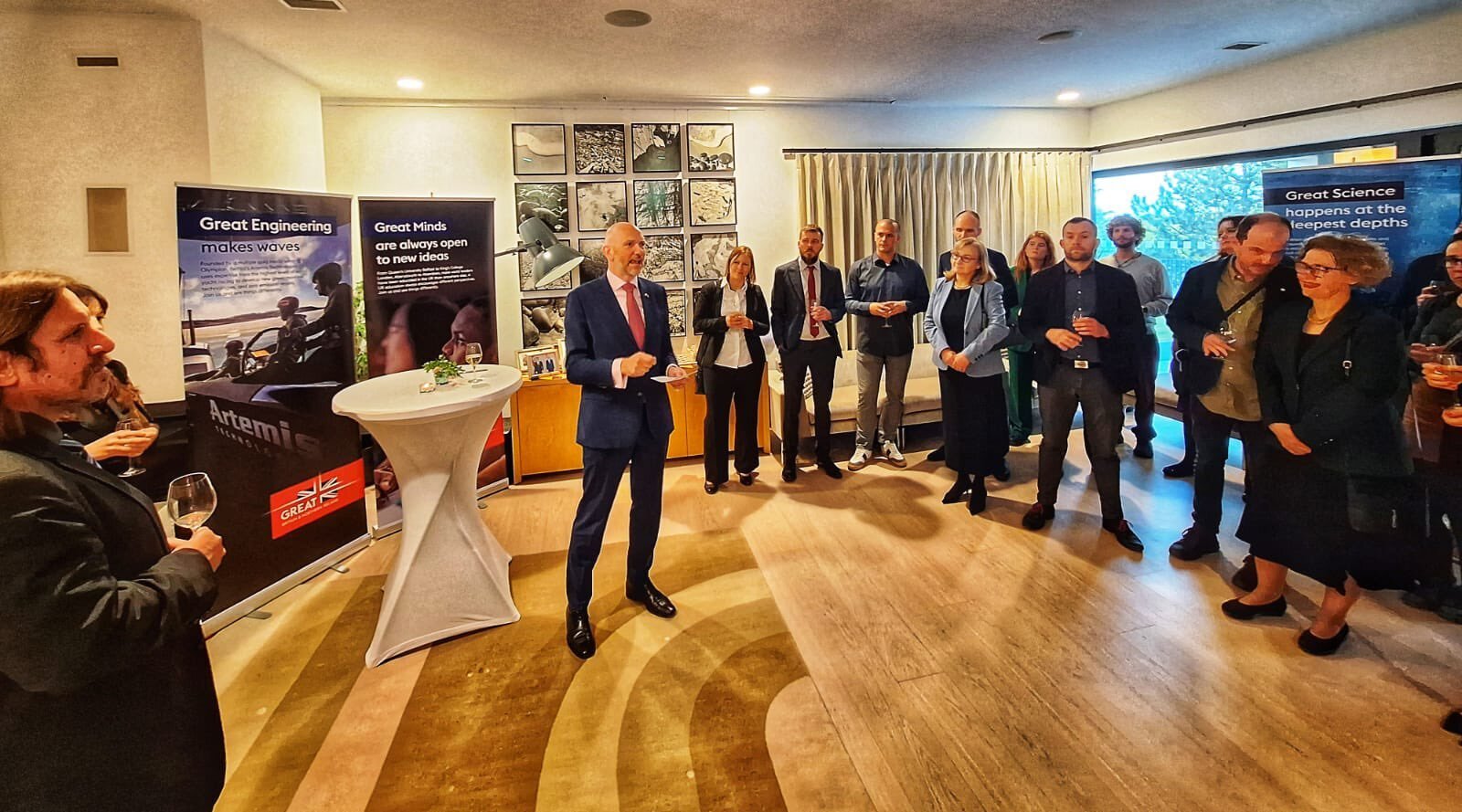
Steve hosted a lab BBQ to say goodbye to Nan, Luna and Cristina as they all finish in the MetaLab and move on to start their PhDs.
Steve hosted a lab BBQ to say goodbye to Nan, Luna and Cristina as they all finish in the MetaLab and move on to start their PhDs.

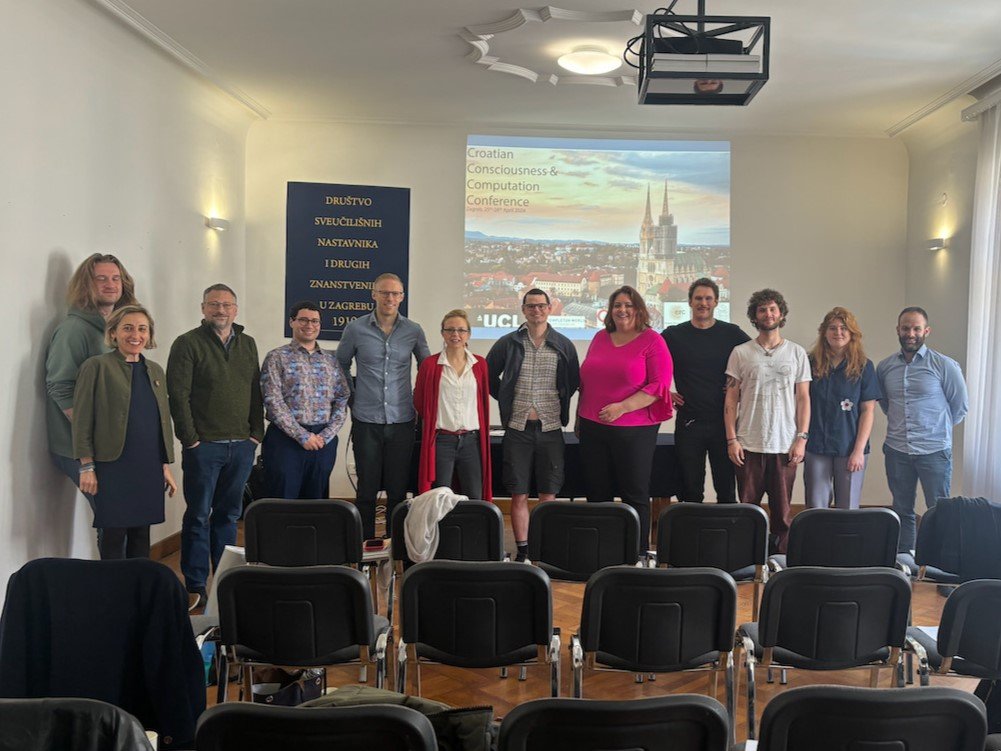
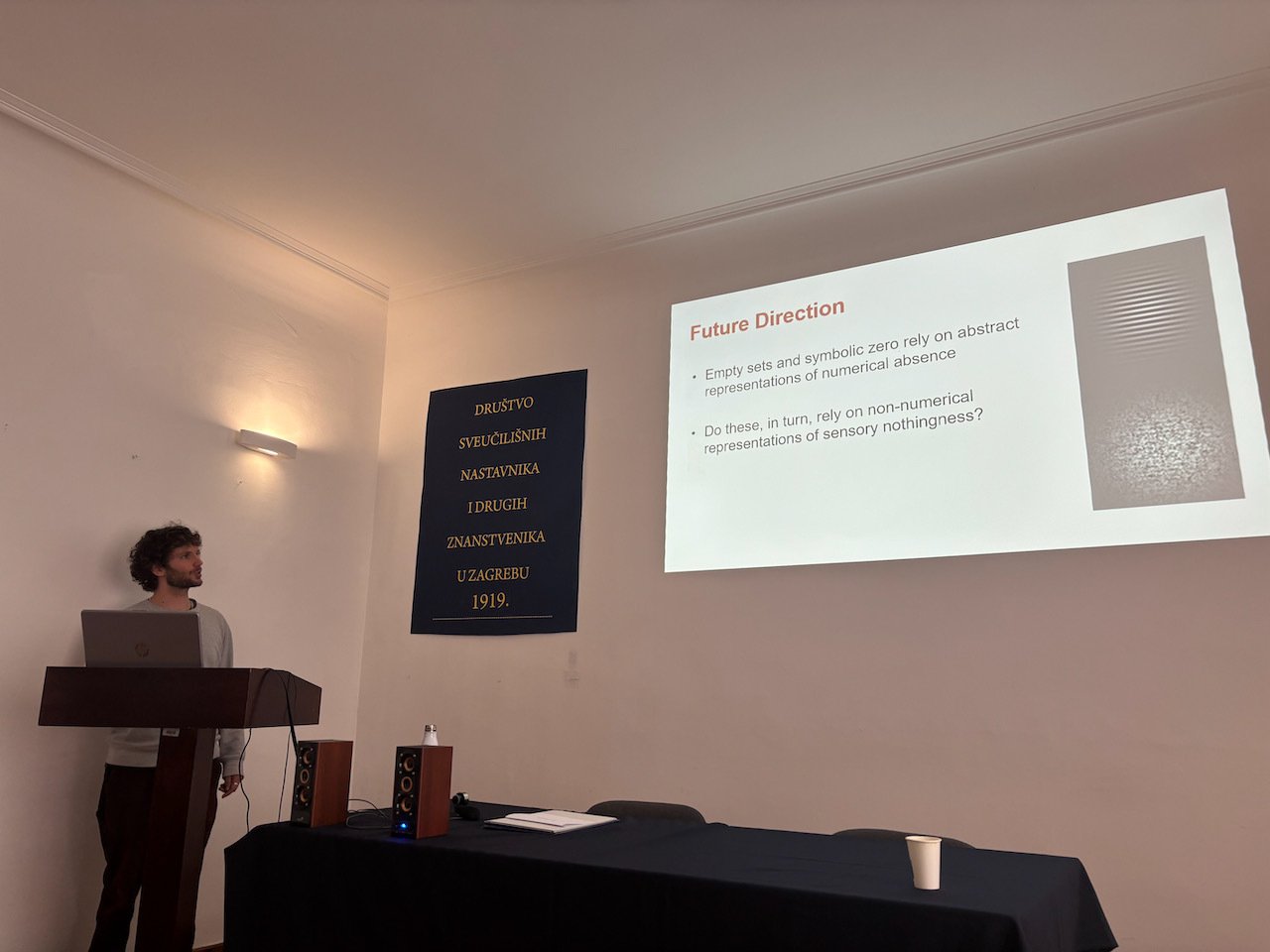
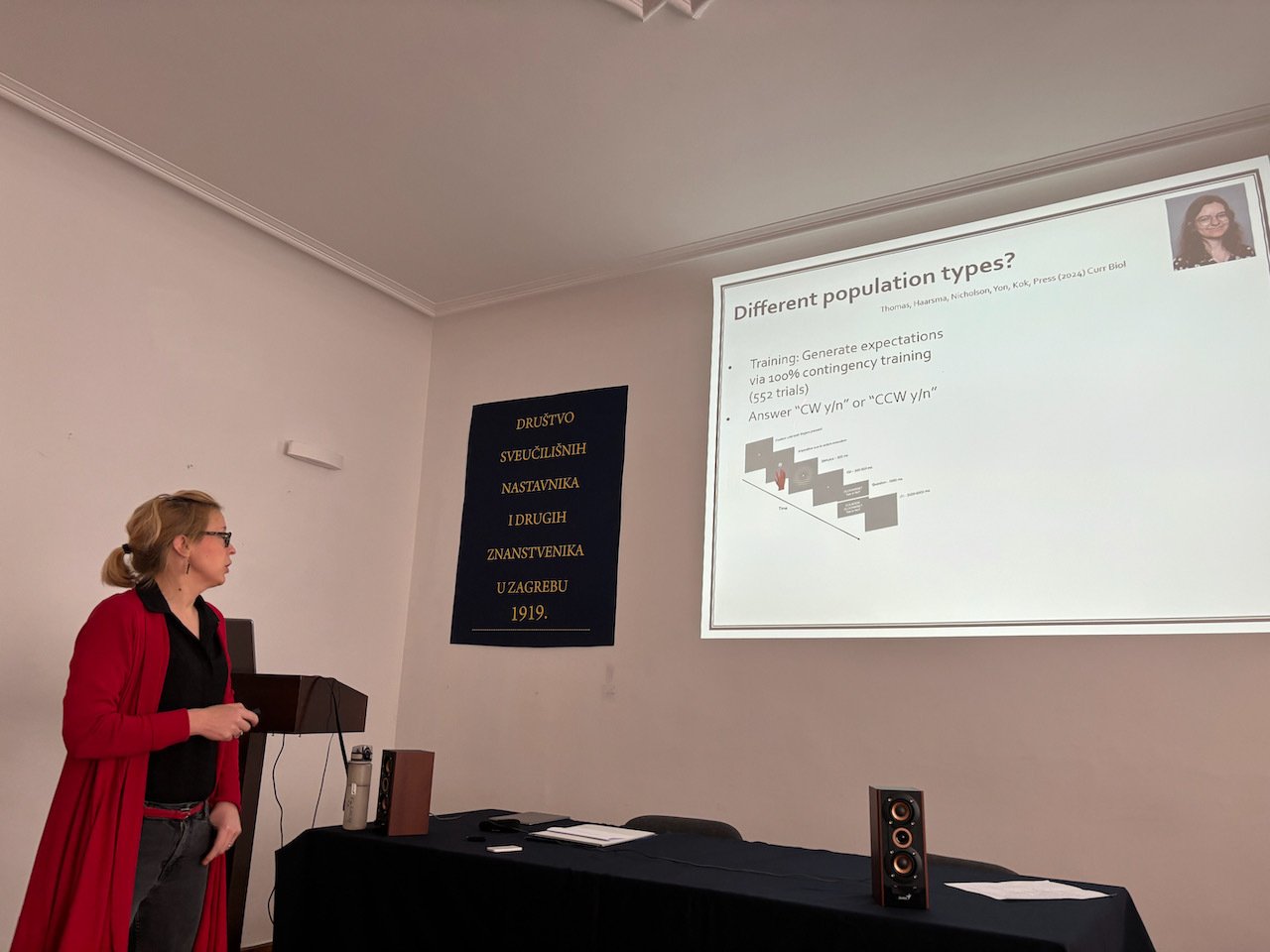
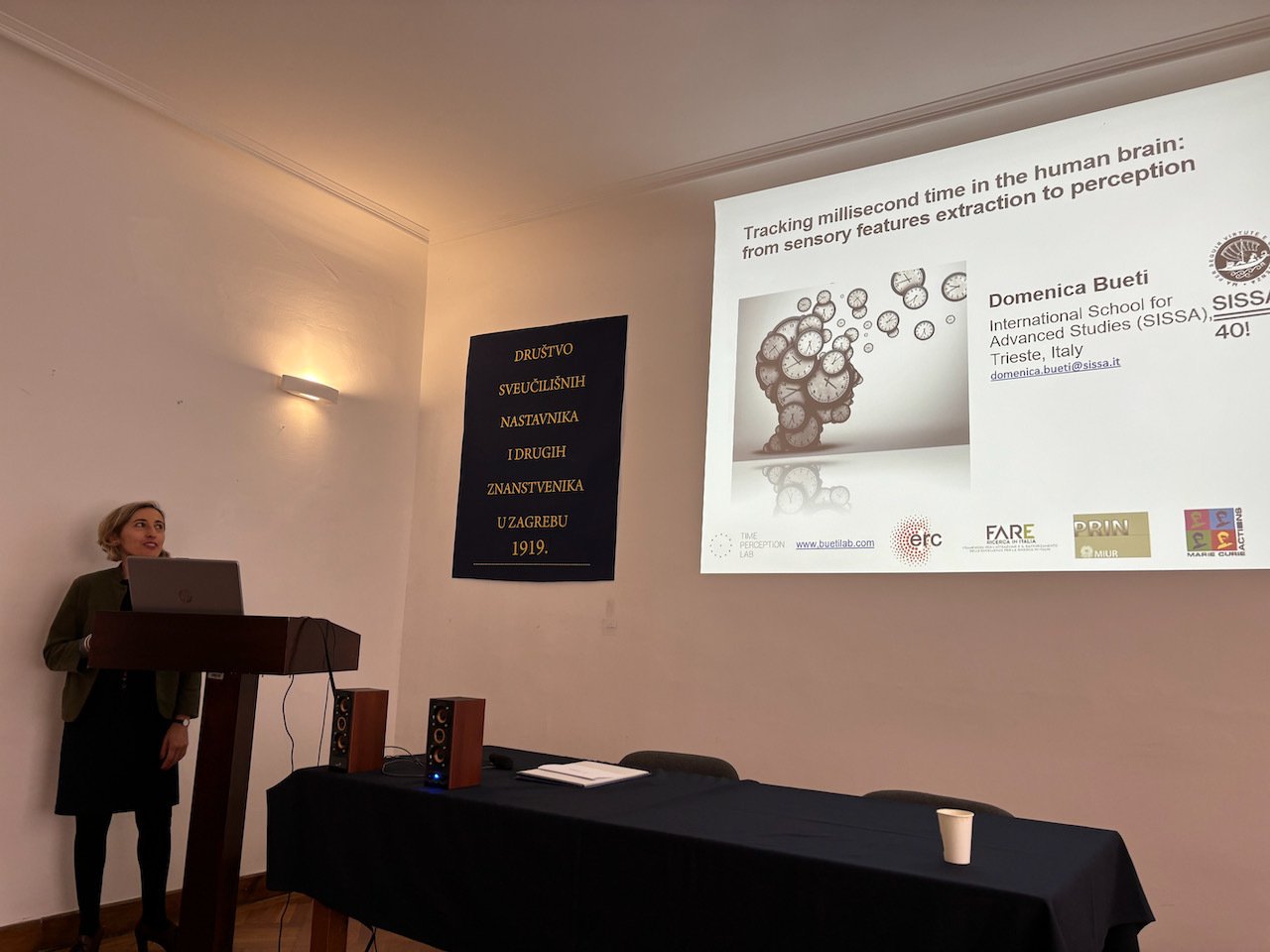
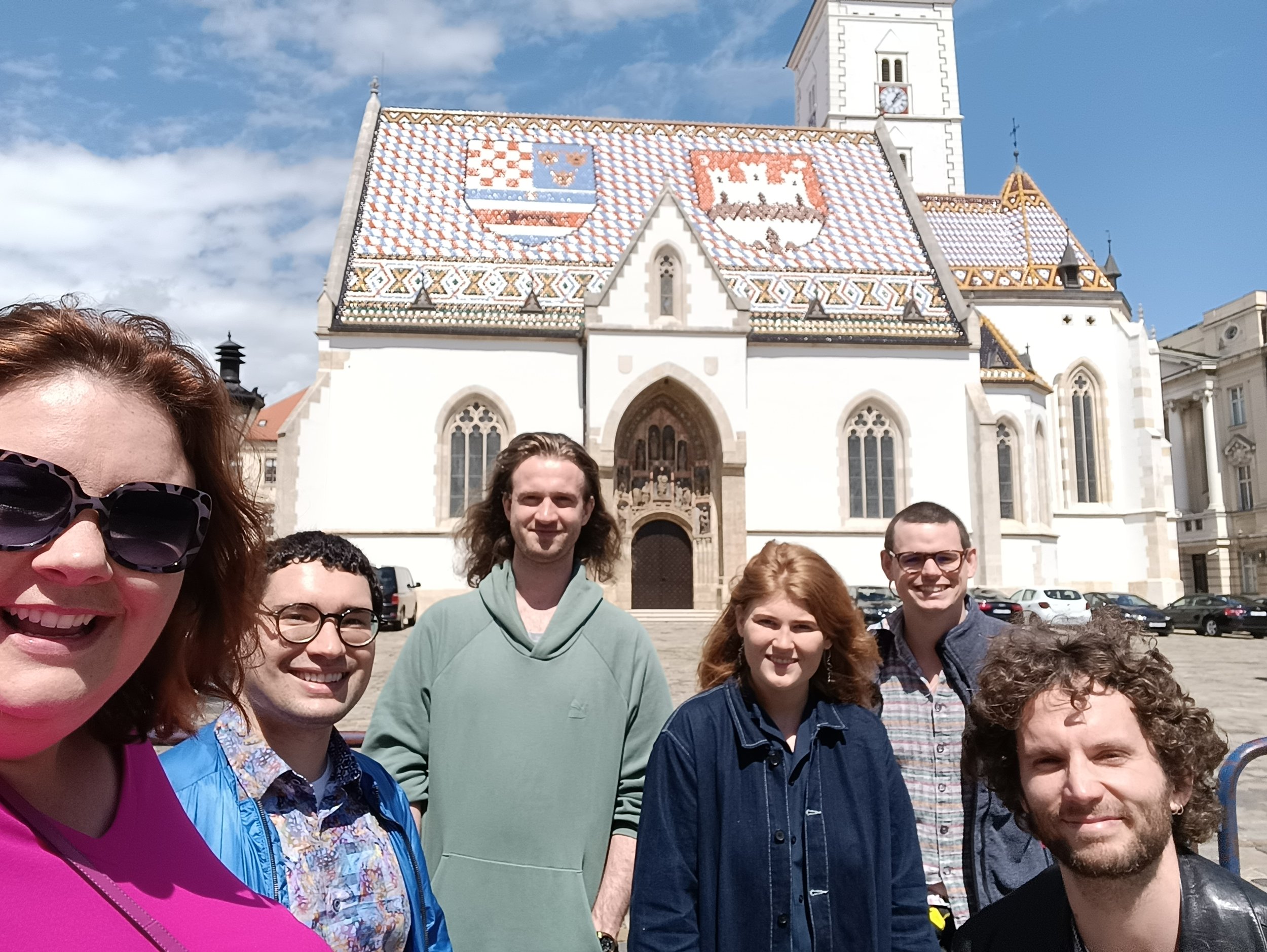
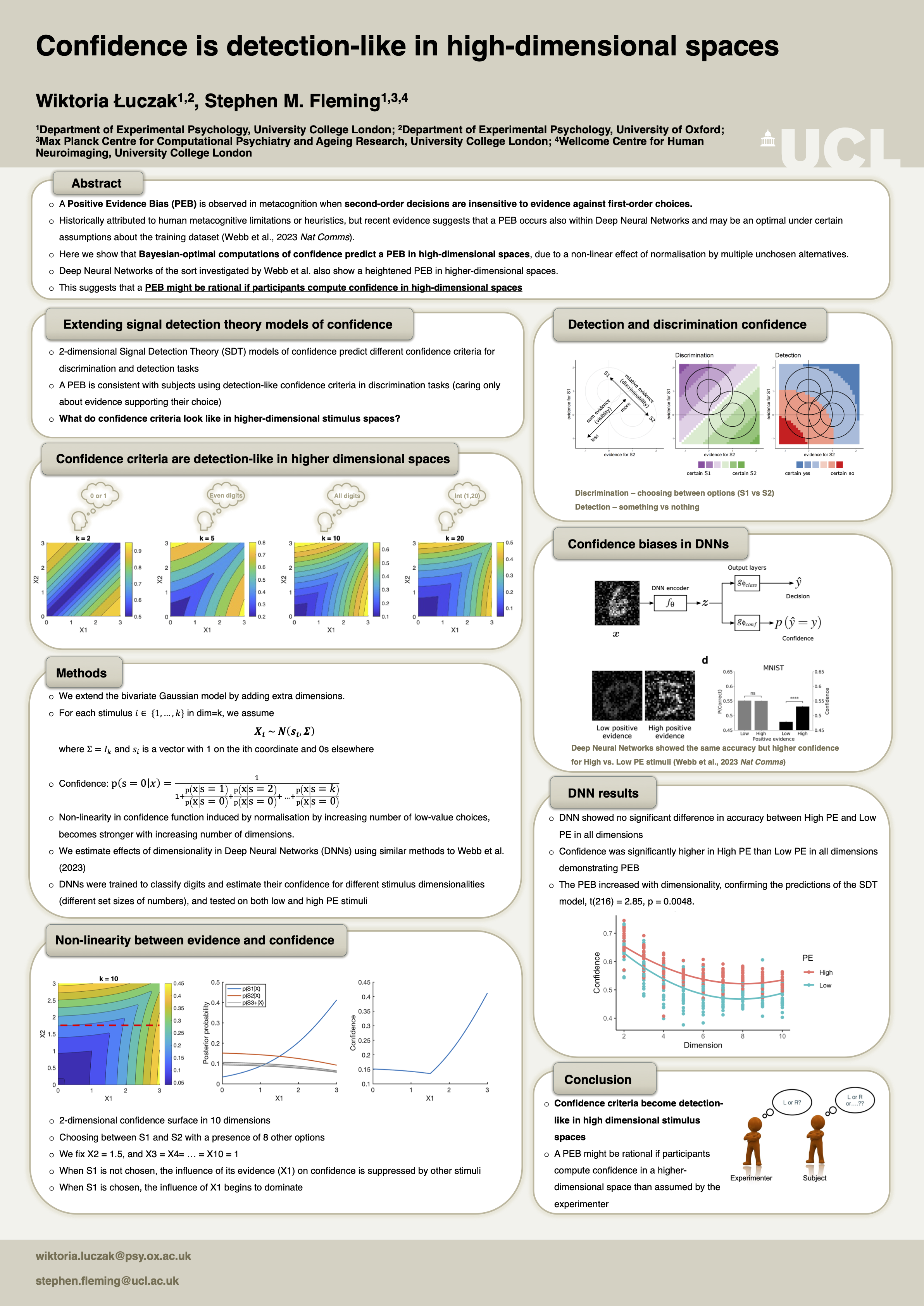
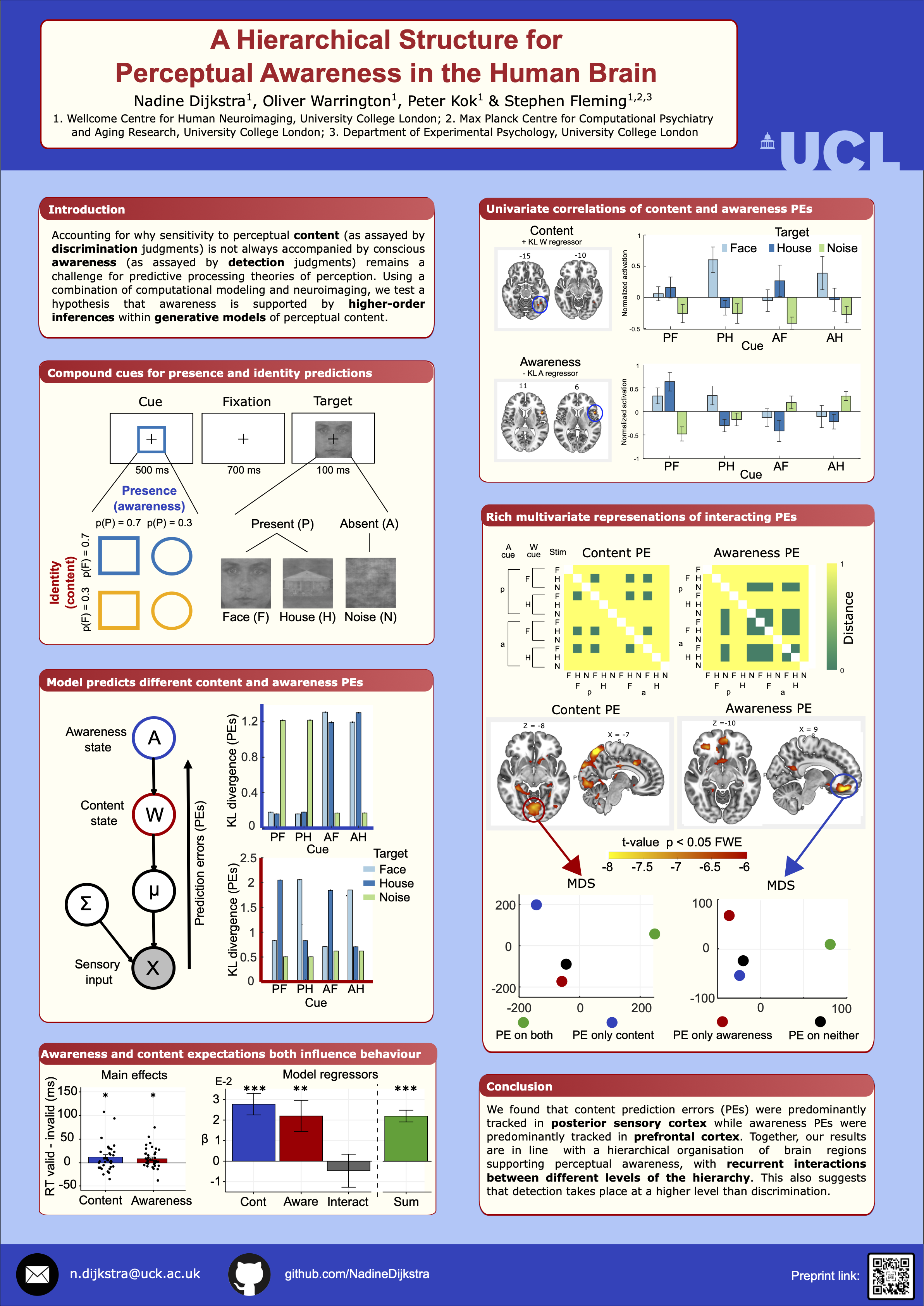
Several lab members gave talk and poster presentations at the Association of the Scientific Study of Consciousness meeting in Tokyo and its satellite meetings.
Photos of lab members in Shinjuku and a selection of posters are included below.

Congratulations to Benjy Barnett whose latest preprint has been featured in the New Scientist magazine and on their podcast!
Fear of predators may have helped us conceptualise the idea of zero
See the full preprint here. And listen to the New Scientist episode here.

Congratulations to Benjy on his paper “Identifying content-invariant neural signatures of perceptual vividness” which is now published in PNAS Nexus
The study used data from different MEG and fMRI experiments to ask how the vividness of our perceptual experiences is encoded in the brain. We showed that there are signals in the brain that keep track of perceptual vividness independently from what is actually being perceived. This suggests there may be higher-order brain regions monitoring the reliability of our perceptual representations, and that this may contribute to our experience of vividness.
The paper is explained in more detail in Benjy’s Twitter thread.
Very pleased to see the first paper of my PhD published in @PNASNexus - with a dream team Lau Møller Andersen, @smfleming and @nadine_dijkstra!
— Benjy Barnett (@benjy_barnett) February 28, 2024
In the paper - we examined a fundamental question about how perceptual vividness is encoded in the brain🧵https://t.co/QarITrjxwH
Clara Colombatto and Sucharit Katyal have both completed their postdocs in the Metalab. Clara is starting her own lab at the University of Waterloo and Sucharit is starting an postdoc at the University of Copenhagen. We wish them all the best in their exciting new roles!


Nadine’s finding that a reality threshold distinguishes between perception and imagination was featured by Quanta Magazine as one of 2023’s biggest breakthroughs in biology and neuroscience!
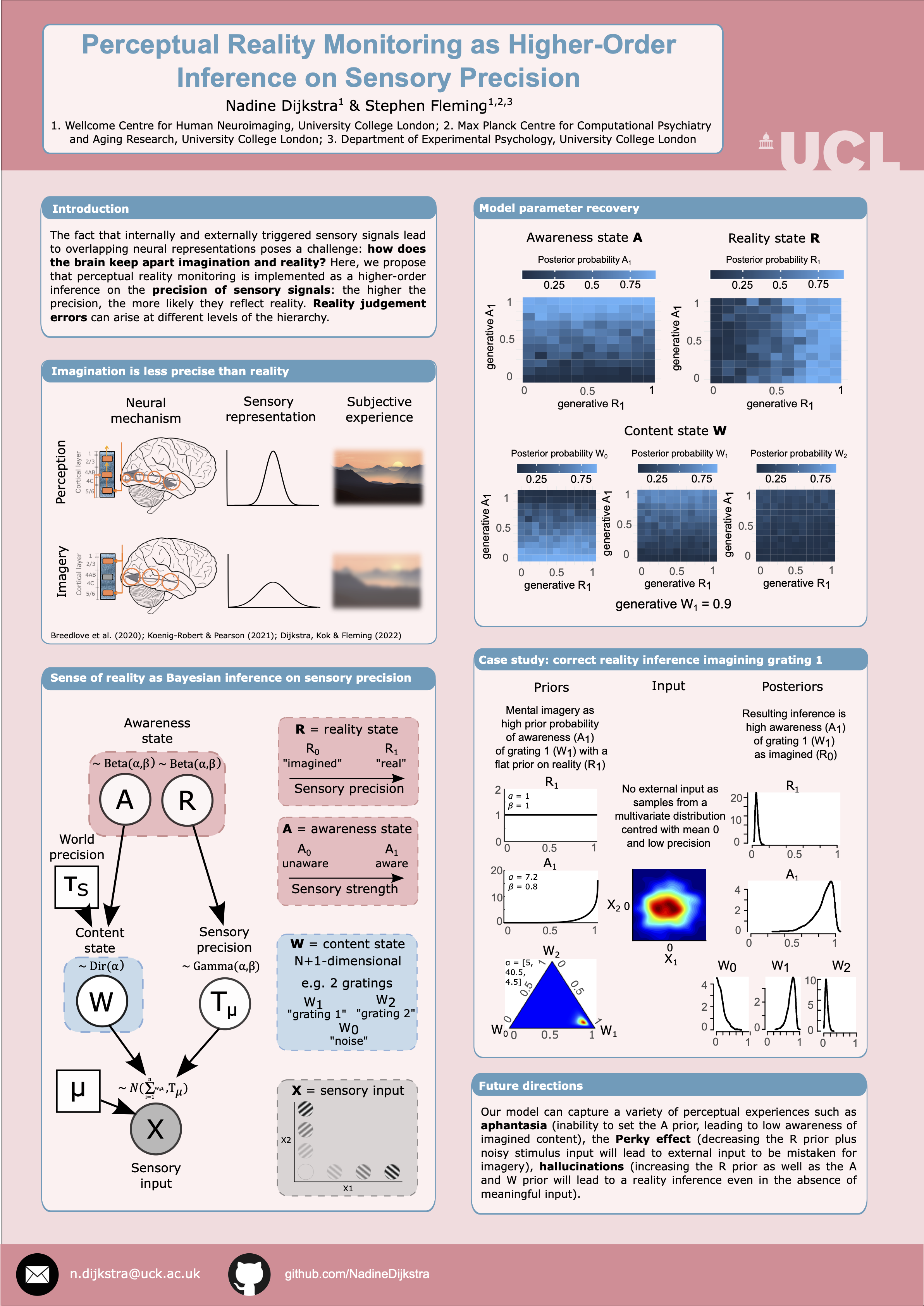
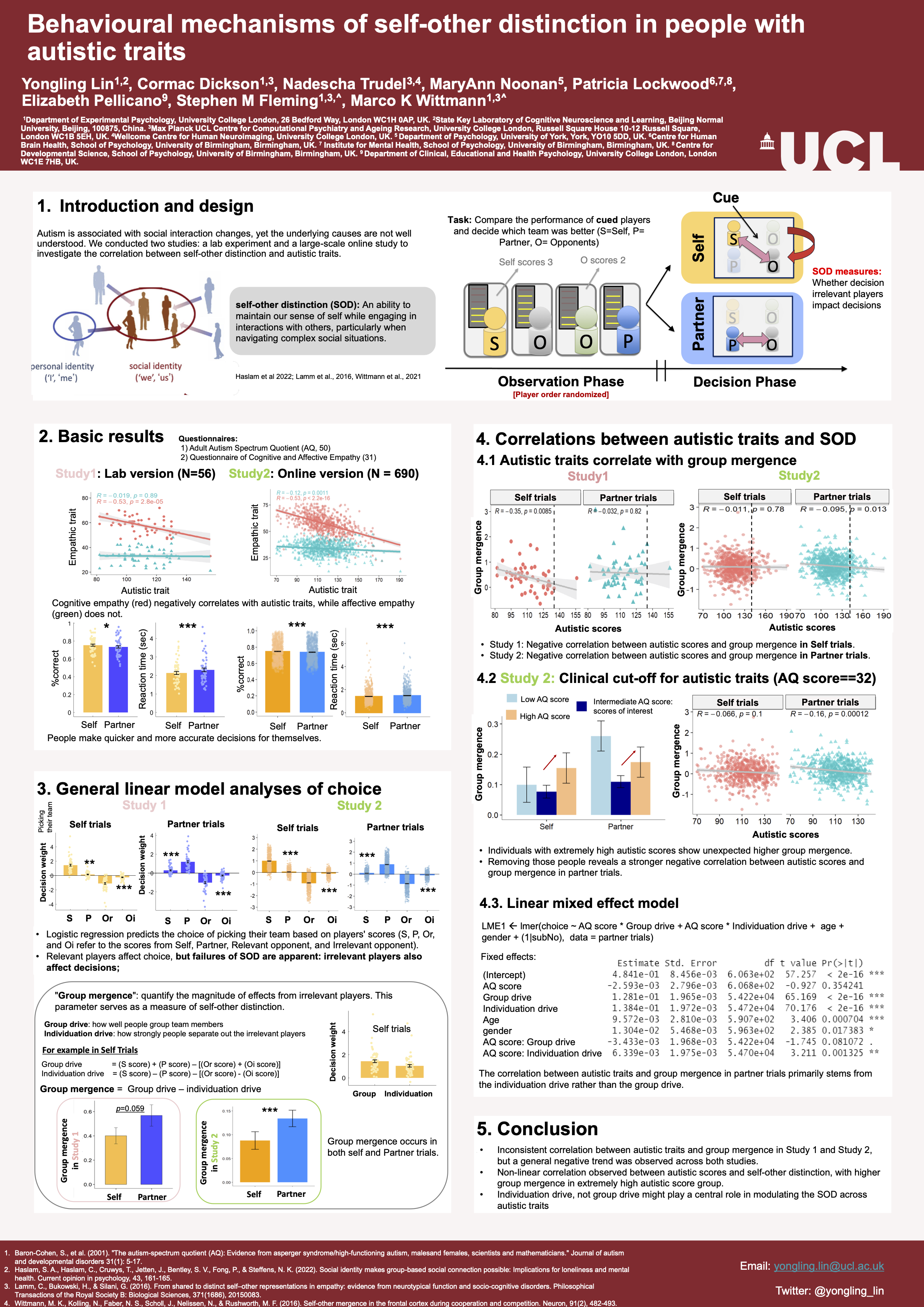
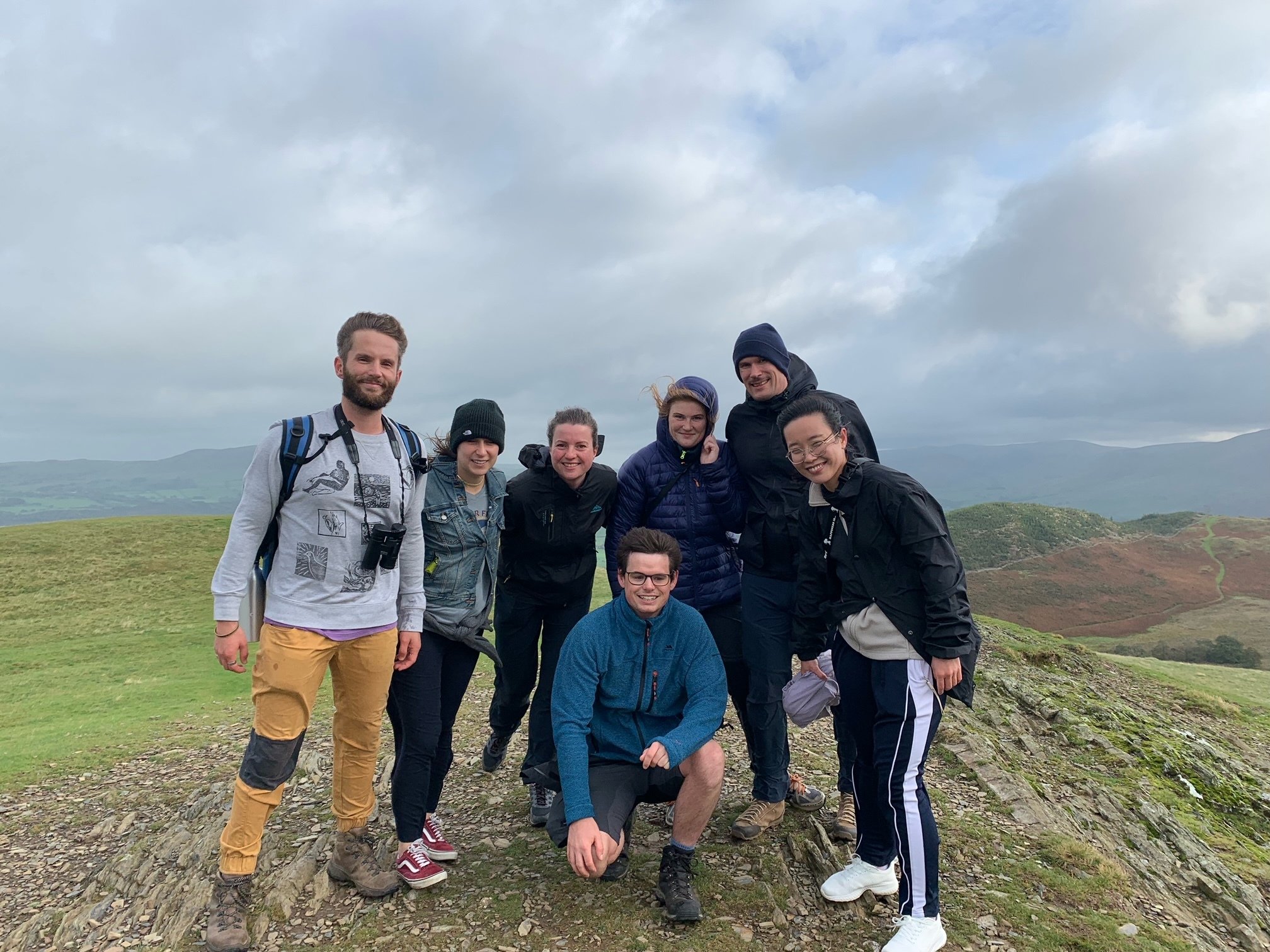
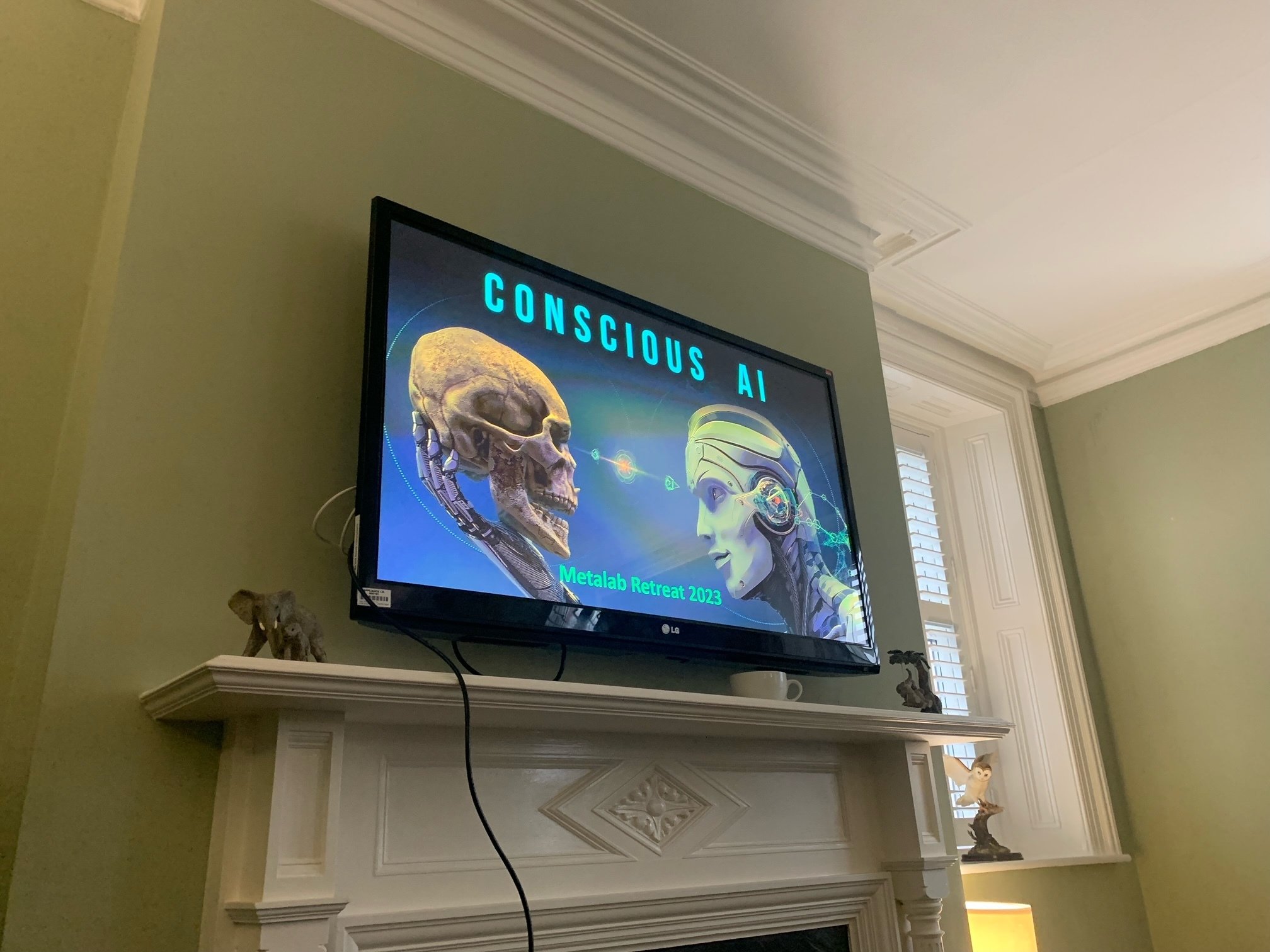
Several members of the MetaLab went away to the wilds of the North Lakes in early October to learn, exchange ideas, cook, walk and generally talk science. A great time was had by all despite the sometimes windswept weather!
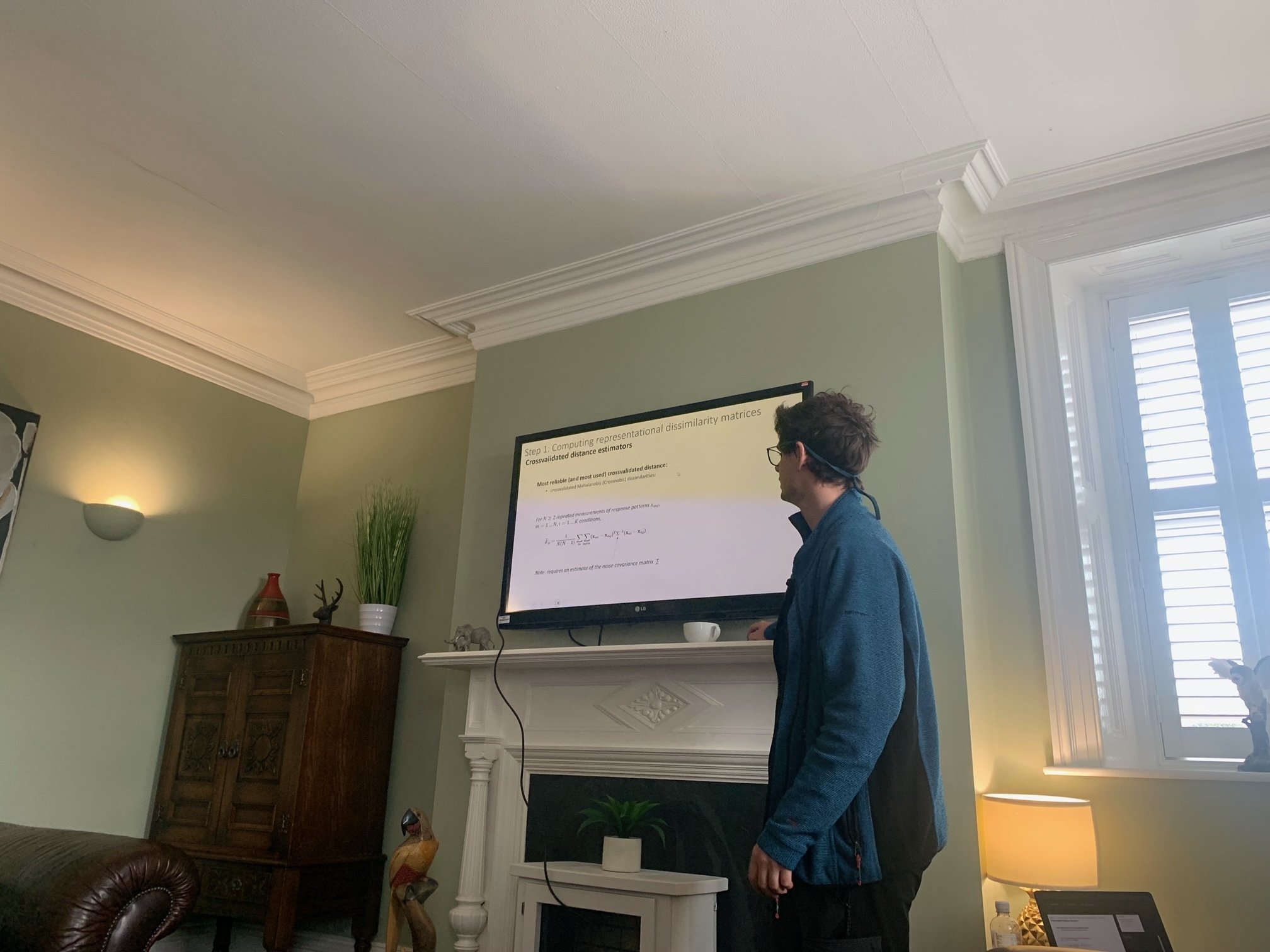
Steve represented the MetaLab on tour at science fesitvals in Rome (Il Festival di Salute) and Bergamo (BergamoScienza), with interviews and presentations about metacognition and self-awareness. Links to videos below (though with simultaneous translation in Italian!)
Steve has been awarded the Francis Crick Medal and Lecture by the Royal Society, “for tackling foundational questions about the neurobiology of conscious experience and advancing our understanding of the neural and computational basis of metacognition.” There will be an in-person lecture in autumn 2023 - watch this space!
I am over the moon to receive the Francis Crick Medal and Lecture from the @royalsociety - a huge honour, and an exciting recognition of consciousness science.
— Steve Fleming (@smfleming) August 30, 2023
V grateful to my generous mentors, and to lab members who have pushed boundaries I did not realise could be pushed! https://t.co/Si6bLT6f7N
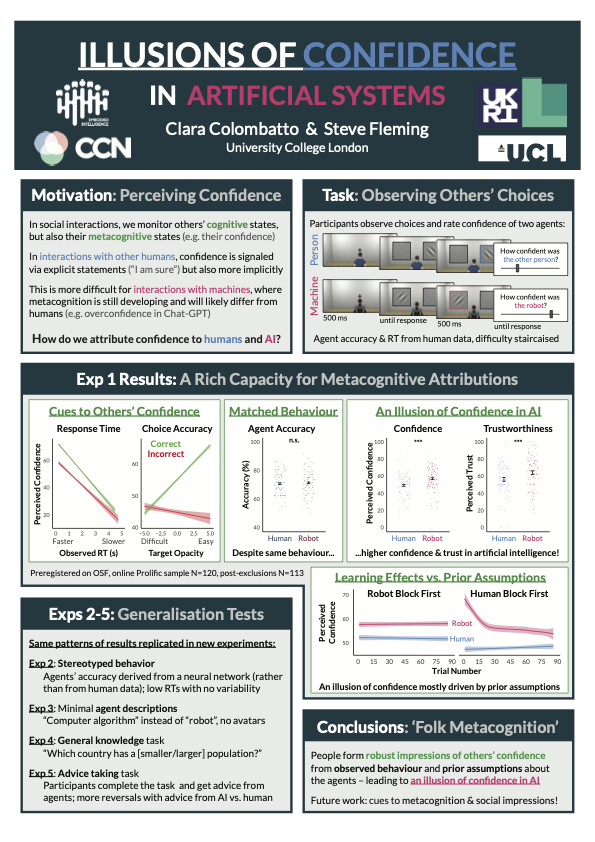
Several lab members gave talk and poster presentations over the summer, at the Association of the Scientific Study of Consciousness meeting in NYC, the Computational Psychiatry conference in Dublin, and the Computational Cognitive Neuroscience conference in Oxford.
A special mention to Wiktoria Luczak who gave her first ever talk about her undergraduate thesis work (on modeling metacognitive distortions) at CCN - congratulations!
A selection of posters is included below.

Nadine has been busy giving interviews on her recent Nature Communications paper showing that subjective signal strength distinguishes reality from imagination.
Here’s a selection of links, enjoy!
UCL press release on the study
Brief article in the London Evening Standard
Excellent and clear deep dive into the study and findings in Quanta Magazine
Interview with Nadine on news talk radio show CKNW in Vancouver, Canada
Interview with Nadine in the Deutsche Welle on Science Inspired

Rebecca Keogh recently wrote a lovely Spotlight in TICS on Nadine’s paper on how subjective signal strenth distinguishes between reality and imagination.
Link to the full article is here.
I am SO excited to share that our paper 'Sensory strength distinguishes imagination from reality' is now published! It was a long process but I'm so happy with the result. With @smfleming.
— Nadine Dijkstra (@nadine_dijkstra) March 27, 2023
See below for thread, code and data 👇https://t.co/TG0Lha4o0M
Congratulations to Nadine on her paper “Subjective signal strength distinguishes reality from imagination” which is now published in Nature Communications.
The study used computer models, online experiments and brain imaging to investigate how people judge whether something is real or imaginary. We found that people were surprisingly bad at knowing whether what they saw was real, or just part of their imagination. These results suggest that, counterintuitively, there is no categorical difference between imagination and reality; instead, it is a difference in degree, not in kind.
For more details check out Nadine’s Twitter thread on the results.

A warm welcome to Nadia Hosseinizaveh who is visiting us for a few months as part of her PhD with Pascal Mamassian at ENS, Paris. Welcome Nadia!
New from the MetaLab in Cognition - global and local metacognition across the lifespan! 🧵https://t.co/dqdJYHPBid
— Steve Fleming (@smfleming) February 9, 2023
Andy’s paper on age-related decline in global metacognition is now published in Cognition:
https://www.sciencedirect.com/science/article/pii/S0010027723000239
Check out the Twitter thread explainer!
Steve has been appointed a Fellow of the Canadian Institute for Advanced Research, in the Brain, Mind and Consciousness Program.

CIFAR is a Canadian-based global research organisation that brings together teams of top researchers from around the world. There are only 20 Fellows worldwide in the Brain, Mind and Consciousness programme. The CIFAR programme will provide funds for the MetaLab’s research into consciousness and metacognition.
Exciting times for consciousness research!
Steve visited Westminster Academy school to talk about what it’s like to be an academic and cognitive neuroscientist and discuss the science of self-awareness. Lots of great questions, the future is in safe hands!
It was a pleasure to welcome @smfleming from @ucl to discuss psychology this week. It was fascinating to hear about metacognition and the exciting work going on in his lab. Thank you to Dr Fleming for a wonderful addition to our "Dare to Know" speaker series. pic.twitter.com/ChqONYykMj
— Westminster Academy (@WestminsterAca) November 10, 2022

Our paper on “Neurocomputational mechanisms of confidence in self and others” is now out in Nature Communications. Congratulations Dan!
This project had a long gestation, being one of the last Steve designed and ran as a postdoc with Nathaniel Daw at NYU in 2014 (!)
A thread from Dan explaining the paper is here:
Delighted to share our paper just out in @NatureComms, “Neurocomputational mechanisms of confidence in self and others”, in collab w/ @moran_rani @nathanieldaw & @smfleming 1/N https://t.co/v7yjfU2rwl
— Dan Bang (@DanBang_) July 29, 2022
With Hakwan Lau, Matthias Michel and Joe Le Doux, we have written a recent opinion piece in Nature Reviews Psychology entitled “The mnemonic basis of subjective experience” outling how implicit knowledge of a quality space may support the capacity to say what an experience is “like” (a relational judgment between two points in perceptual space). This is exciting because it captures the famous “what it is like” definition of phenomenology in computational terms, and leads to testable experiments about the functional role and neural implementation of conscious processing.

1/ although @theamygdaloid got me into memory stuff slightly before that, this paper is pretty much a pandemic brainchild. the hypothesis that prefrontal grid-code may be involved in representing the quality space was suggested to me by @smfleming over i talk i gave on zoom https://t.co/zdwPkW344v
— hakwan lau 🇺🇦 (@hakwanlau) June 1, 2022