Consciousness Club
The Consciousness Club is a revival of a meeting of the same name that was organised in the 1990s by Chris Frith. We aim to bring together an interdisciplinary audience of colleagues in various fields of cognitive science, neuroscience, psychology and philosophy in the London area with a mutual interest in consciousness science. We provide a friendly atmosphere with plenty of time for discussion. The seminar series is generously supported by the Leverhulme Trust, and co-hosted by Steve Fleming and Nadine Dijkstra.
All are welcome! To join our mailing list, please send an email to Sarah Kalwarowsky (s.kalwarowsky[at]ucl.ac.uk).
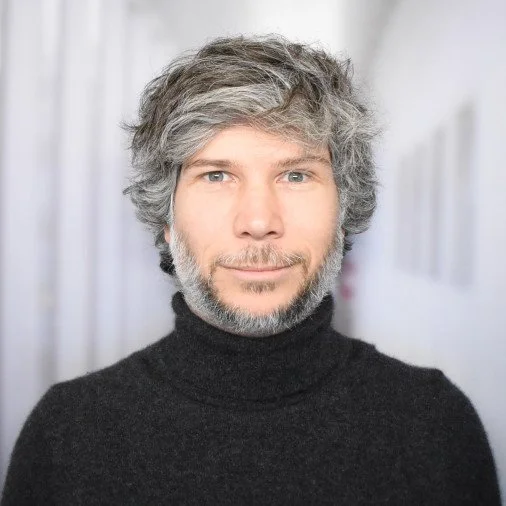
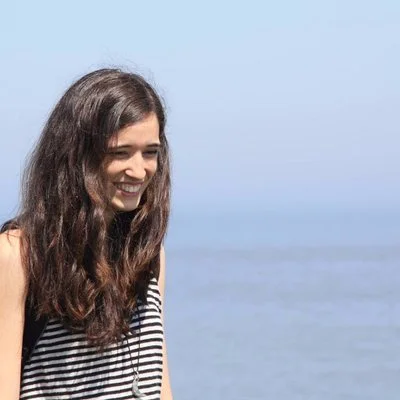
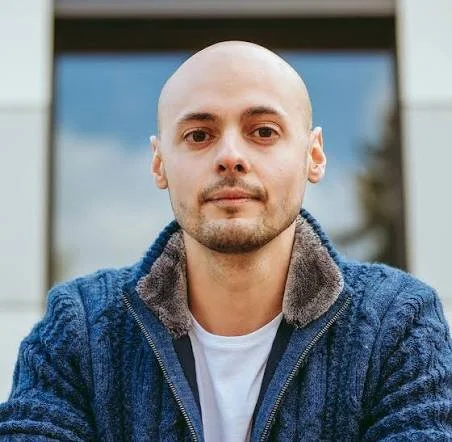
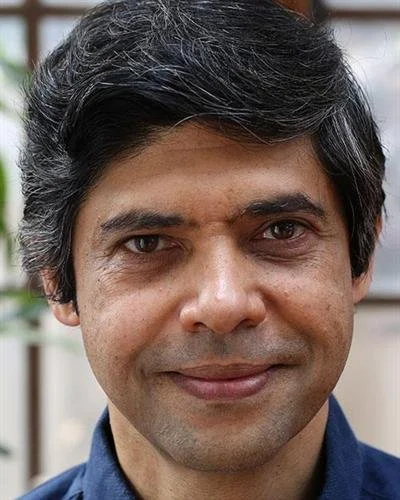
Talks are held via Zoom, and login details will be provided via the mailing list. Recordings of talks will be uploaded here with the speaker’s permission, but we encourage everyone to join “live” where possible for the interactive discussion. To access recordings of previous speakers’ talks, please click on the image of each speaker to be taken to the video page or head to our Youtube page.

Title: Understanding human thinking and the generative mind
Abstract: A core feature of human intelligence is the ability to flexibly construct internal representations to guide thought and behavior. While these processes rely on distributed brain networks, how the brain coordinates multiple internal representations to support flexible thought and imagination remains poorly understood. In this talk, I will present a series of recent studies investigating these neural dynamics. I will first demonstrate how a distributed working memory network underlies the generation and maintenance of internal representations. I will then show how the canonical working memory network interacts with the default mode network to support the prioritization and sustained maintenance of multiple internal representations. Finally, if time permits, I will reveal how the brain dynamically reactivates past experiences and constructs future trajectories during sequential mental navigation. Together, these findings provide new insights into how distributed brain networks give rise to the conscious experience of ongoing thought.
Chinese Academy of Sciences
http://english.cebsit.cas.cn/lab/yuqing/research/
TBC
University College Dublin
https://www.researchgate.net/profile/Elisabeth-Pares-Pujolras
please note the different time 9am-10:30am UK time
TBC
Australian National University
https://www.lu-teng.com/
TBC
University of Southampton
https://www.southampton.ac.uk/people/62bxyp/doctor-arezoo-pooresmaeili
please note the different time 3pm-4:30pm UK Time
TBC
Princeton University
https://williamnkoller.com/
please note the different time 3pm-4:30pm UK Time
TBC
Princeton University
https://compmem.princeton.edu/augustin-c-hennings/
Previous Consciousness Club Talks
To view recordings of previous talks, please click on the image of each speaker.
Title: Cortex-wide computational modelling of neural dynamics during conscious access
Abstract: Recent advances in neuroimaging, anatomy and physiology make it possible to probe whole-brain neural correlates of conscious perception in unprecedented detail. However, as yet, few models in computational neuroscience have tackled the mechanisms underlying dynamic, distributed neural activity during tasks probing conscious access. In this talk I will describe our anatomy-led approach to developing multiscale models of neural activity during cognitive tasks. I will focus on the mechanisms that may produce reported neural correlates of conscious access. I will then talk about recent work investigating competition between internally- and externally-oriented cognition and a potential role of serotonin (and psilocybin) in mediating this competition.
University of Oxford & Trinity College Dublin
https://www.oxcin.ox.ac.uk/people/sean-froudist-walsh
Due to unforseen illness, this event has been cancelled. Apologies for any disappointment.
Musical beat processing: cognitive, neural, and cross-species perspectives
A core feature of human music cognition is the ability to perceive a periodic underlying beat in complex rhythmic sequences. Beat perception has an intimate link to movement, scaffolding synchronized movements to music among performers and listeners. Growing evidence from cognitive neuroscience points to an important role for the motor system in beat perception, even in the absence of overt movement. Several researchers have hypothesized that auditory-motor interactions play a causal role in the brain’s ability to predict beat timing. In this presentation I will discuss ideas for the role that specific motor structures play in predicting the timing of beats (even in the absence of movement), describe some surprising aspects of cross-species findings on beat processing, and introduce the phenomenon of musical “beat deafness”, in order to spark discussion of how this deficit in beat perception and synchronization may relate to metacognition.
https://as.tufts.edu/psychology/people/faculty/aniruddh-patel
Mind-body dualism: A perceptual core (in collaboration with Merav Ahissar and Daniel Polani)
Weizmann Institute of Science
The Dynamics of (Un)Consciousness: Insights from Olfaction and Respiration
Hebrew University of Jerusalem
Linking arousal state fluctuations and recurrent processing to conscious perception
University of Amsterdam
Tracking perceptual competition with Rapid Invisible Frequency Tagging (RIFT)
University of Utrecht
A neural model of conscious mental imagery and aphantasia
Cognitive Neuroimaging Unit, Collège de France