Steve interviewed by Times Radio
Steve was interviewed for Hugo Rifkind’s Times Radio show on Saturday morning about metacognition, self-awareness, AI and lots more - listen again here:
Steve was interviewed for Hugo Rifkind’s Times Radio show on Saturday morning about metacognition, self-awareness, AI and lots more - listen again here:

The MetaLab is glad to welcome Yuena Zheng (MSc in Neuroscience) and Cormac Dickson (MSc in Psychological Sciences) who will be doing their Masters projects with us this year. Yuena will be focusing how different regions in frontal and parietal cortex work together to support decision confidence formation, together with Dan Bang. Cormac will be working on expanding out the higher-order state space model of awareness to investigate temporal dynamics.


The MetaLab have been awarded an EPSRC Programme Grant as part of a large team of researchers based at UCL and Oxford, led by Ingmar Posner at the Oxford Robotics Institute. This £6M award with multiple industry partners aims to deliver autonomous robot systems which amplify human capacity and potential. More details about the broader project can be found here.
Steve’s role in the project is to lead work on metacognition - the ability to reflect on and evaluate other cognitive processes. We anticipate that by building metacognitive capability into the robots of the future, they will become able to know what they don't know, improving collaboration and trust in human-robot teams. We will combine research on humans and human-robot teams to map metacognitive processes in humans (such as confidence judgments) to similar processes in robots to identify gaps and opportunities for novel, neuroscience-inspired architectures.
We will be advertising for a postdoc to lead this work in early 2021, please do get in touch if it’s of interest!


Oliver Warrington will be leaving the lab this month, but is not going far - in January he starts his PhD with Peter Kok, also at the WCHN. Congratulations Oliver, and best of luck for these next steps!
Lion Schulz and Max Rollwage’s paper on relationships between dogmatism, confidence and information seeking is now out in PNAS! They find in two large online samples that being more dogmatic is characterised by a weaker link between confidence and information seeking in a simple perceptual decision-making task.
A Twitter thread explaining the findings is copied below, and a UCL press release is here. This was Lion’s Masters project in the lab, and he’s now a PhD student with Peter Dayan at the MPI for Biological Cybernetics.
Congratulations to Lion and Max!

Excited to share this! We show that dogmatic beliefs are predicted by how people use their confidence to guide their search for information - out in @PNASNews w/ @M_Rollwage, Ray Dolan and @smfleming (@WCHN_UCL, @EP_UCL, @MPC_CompPsych). [Thread] 👇 https://t.co/6BcNShNPi8 pic.twitter.com/9CmGo5oxTX
— Lion Schulz (@Lion_Schulz) November 20, 2020
A new study on links between local and global metacognition led by Marion Rouault has been published in PNAS. Marion built on a previous paradigm she developed while a postdoc in the MetaLab, examining links between local confidence in individual decisions and “global” self-performance estimates (SPEs) over longer timescales. In conjunction with brain imaging, Marion has now shown that interactions between local and global confidence estimates are observed in ventromedial PFC and precuneus, whereas ventral striatal activity tracks global SPEs independently of local confidence. These results provide initial evidence that confidence signals are tracked across multiple hierarchical levels in the human brain.
Congratulations Marion!

I’m excited to announce our new paper out today in @PNASNews @smfleming and I examine the formation of global self-beliefs in the human brain https://t.co/lg86zjSmwa
— Marion Rouault (@marion_rouault) October 16, 2020
A new study published in Neuron and led by MetaLab postdoc Dan Bang in collaboration with Ken Kishida (Wake Forest University) and Read Montague (Virginia Tech) has revealed novel neuromodulator contributions to perceptual decision-making in humans. Dan combined a perceptual decision-making task with a rare opportunity to study neuromodulator fluctuations in patients undergoing deep brain stimulation (DBS) surgery. A novel method called “fast scan cyclic voltammetry” allows for the real-time measurement of neuromodulators such as dopamine and serotonin. In one part of the striatum (caudate nucleus), Dan found that serotonin levels rapidly increased when perceptual uncertainty was high. In another part of the striatum (putamen), both dopamine and serotonin were found to trigger the action that indicated a patient’s decision.
In our previous work using this task together with brain imaging, we focused on how different parts of cortex supports computations of sensory uncertainty and decision confidence. But brain imaging is normally blind to neuromodulator levels. Here, by collaborating with the fantastic teams at Virginia Tech and Wake Forest, we have now gotten a unique insight into how these neurochemicals contribute to the decision process.
More details about the study can be found in this news article on the WCHN website.

Super excited to share our paper just out in Neuron, “Sub-second dopamine and serotonin signaling in human striatum during perceptual decision-making”, co-first-authored by me & @kenkishida and w/ Read Montague, @smfleming & other amazing scientists 1/N https://t.co/PGcJqrwZKd
— Dan Bang (@DanBang_) October 12, 2020
Congratulations to Nadine who recently defended her PhD entitled “Envisioning imagination: neural overlap between visual imagery and perception” at the Donders Center for Cognition. The viva in the Netherlands is full of ceremony that we are sadly denied here in the UK, as the picture below indicates. The award was made with a cum laude distinction, which is a fantastic achievement - well done!
If you are interested in reading more, Nadine’s thesis can be downloaded here.

Max and Nadim are both leaving the group this month to begin the competitive Entrepreneur First programme based in London. We wish them the best of luck, and hope that they stay in touch!
Their leaving do was held via Zoom, but some physical gifts were exchanged - coffee, beer and MetaLab mugs!


Congratulations to Max who successfully defended his PhD, making him the first PhD graduate from the MetaLab! Thank you also to Tali Sharot and Redmond O’Connell for being superb examiners. We sadly could not convene for an official post-viva celebration in person but got by with a combination of Zoom and socially distanced beers at the Queens Larder!
Dan Bang’s paper entitled “Private-public mappings in human prefrontal cortex” has been published recently in eLife. Dan used confidence estimation as a model system to ask how private (“what I feel”) and public (“what I say”) aspects of mental states are separately encoded, and how different subregions of prefrontal cortex may control these private-public mappings. We think that this process is important for flexible social behaviour, and a Twitter thread summarising our findings is below. This is the first paper from Dan’s Sir Henry Wellcome Fellowship focusing on the neurobiological basis of social behaviour. Congratulations Dan!

The dynamo that is @Dan_Bang is at it again- his study of private-public mappings is now out in @eLife, together with @hamed_nili and @SaraErshad. We study how the brain maps private mental states (“what I feel”) to public actions (“what I say”) Thread here👇 https://t.co/Sls2OZTISh
— Steve Fleming (@smfleming) July 24, 2020
MetaLab and Max Planck Centre PhD student Max Rollwage has been awarded one of the 2020 Jon Driver Prizes, awarded to outstanding young neuroscientists at UCL. He was given the award at the UCL Neuroscience Symposium held last week. Many congratulations to Max!
Jon Driver (1962 - 2011) was a highly influential cognitive neuroscientist whose work had a major impact world-wide, and who played a leading role in the neuroscience community at UCL. This award is particularly poignant as Steve, Max’s PhD supervisor, was mentored by Jon when he himself was a PhD student. Jon was also a great friend of Ray Dolan, Max’s second supervisor. Many of these personal memories are collected here: http://jondriver1962-2011.blogspot.com/

Max Rollwage’s paper entitled “Confidence drives a neural confirmation bias” has been published recently in Nature Communications. Max quantified how confidence in a decision alters MEG signatures of subsequent evidence accumulation, and how such alterations might underpin a confirmation bias in decision-making. A Twitter thread summarising our findings is below, and UCL’s press release can be found here. Congratulations Max!
MetaLab PhD student @M_Rollwage's paper is out today in @NatureComms, in collaboration with @AlisaLoosen, @TobiasUHauser, @moran_rani & Ray Dolan. We were interested in how people process new information, and how confidence affects this. Thread 1/N
— Steve Fleming (@smfleming) May 26, 2020


Matan Mazor’s paper entitled “Distinct neural contributions for detecting, but not discriminating, visual stimuli” has been published in eLife - congratulations Matan!
A Twitter thread explaining the key findings can be found below:
New preprint from @mazormatan, Karl Friston and me: Distinct neural contributions to metacognition for detecting (but not discriminating) visual stimuli https://t.co/hFQOFbfIdy 1/N
— Steve Fleming (@smfleming) November 26, 2019
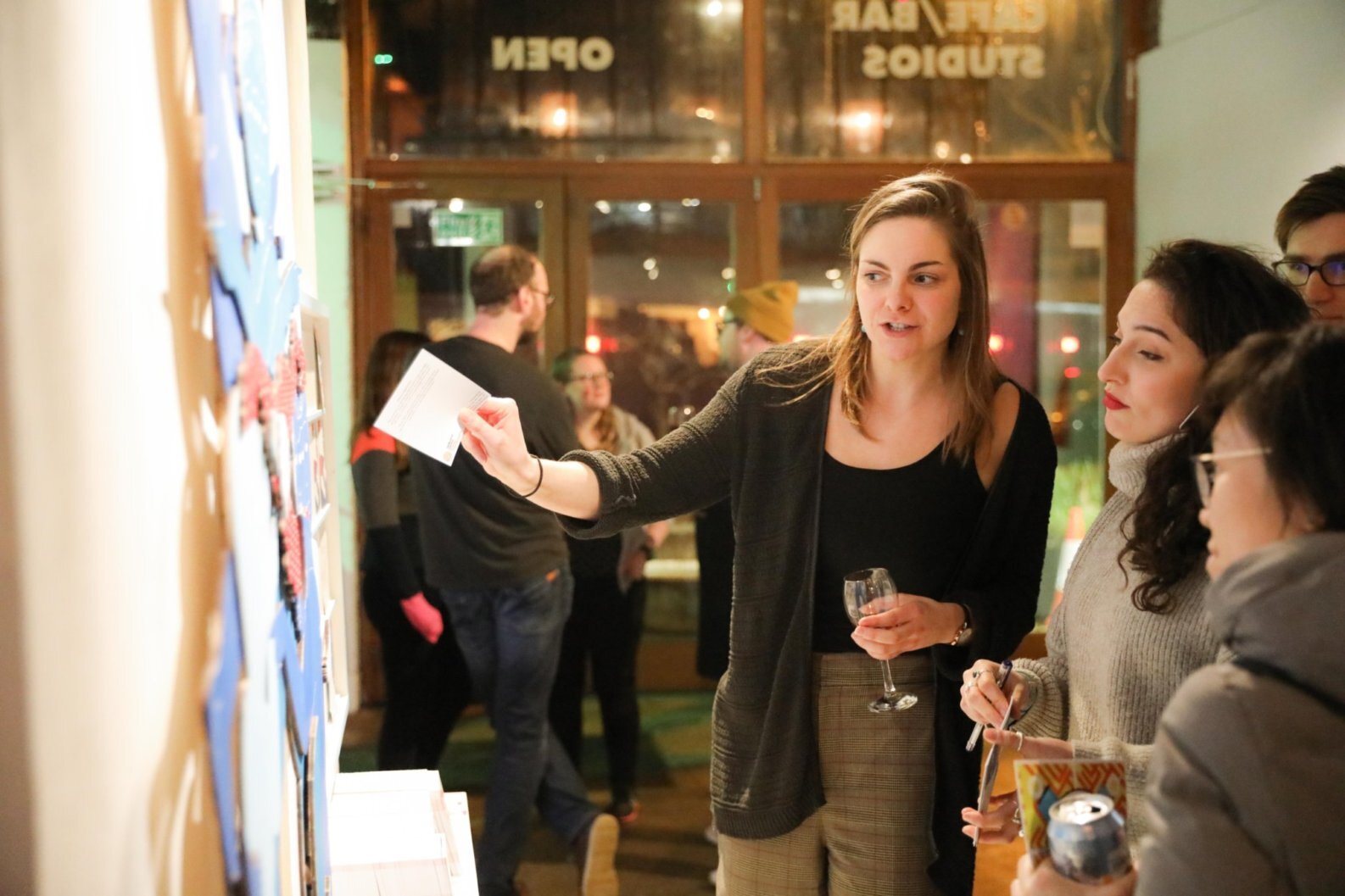
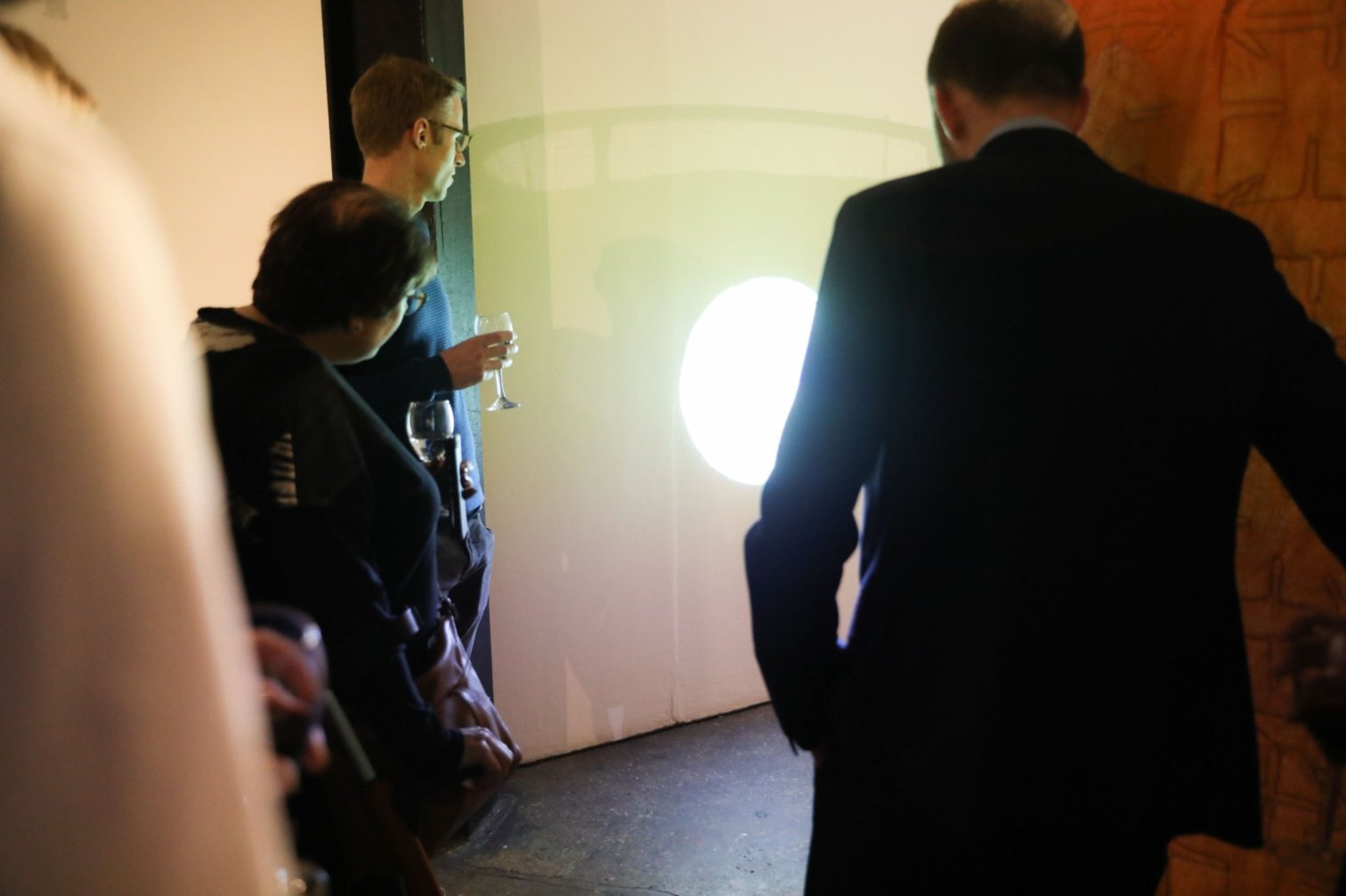
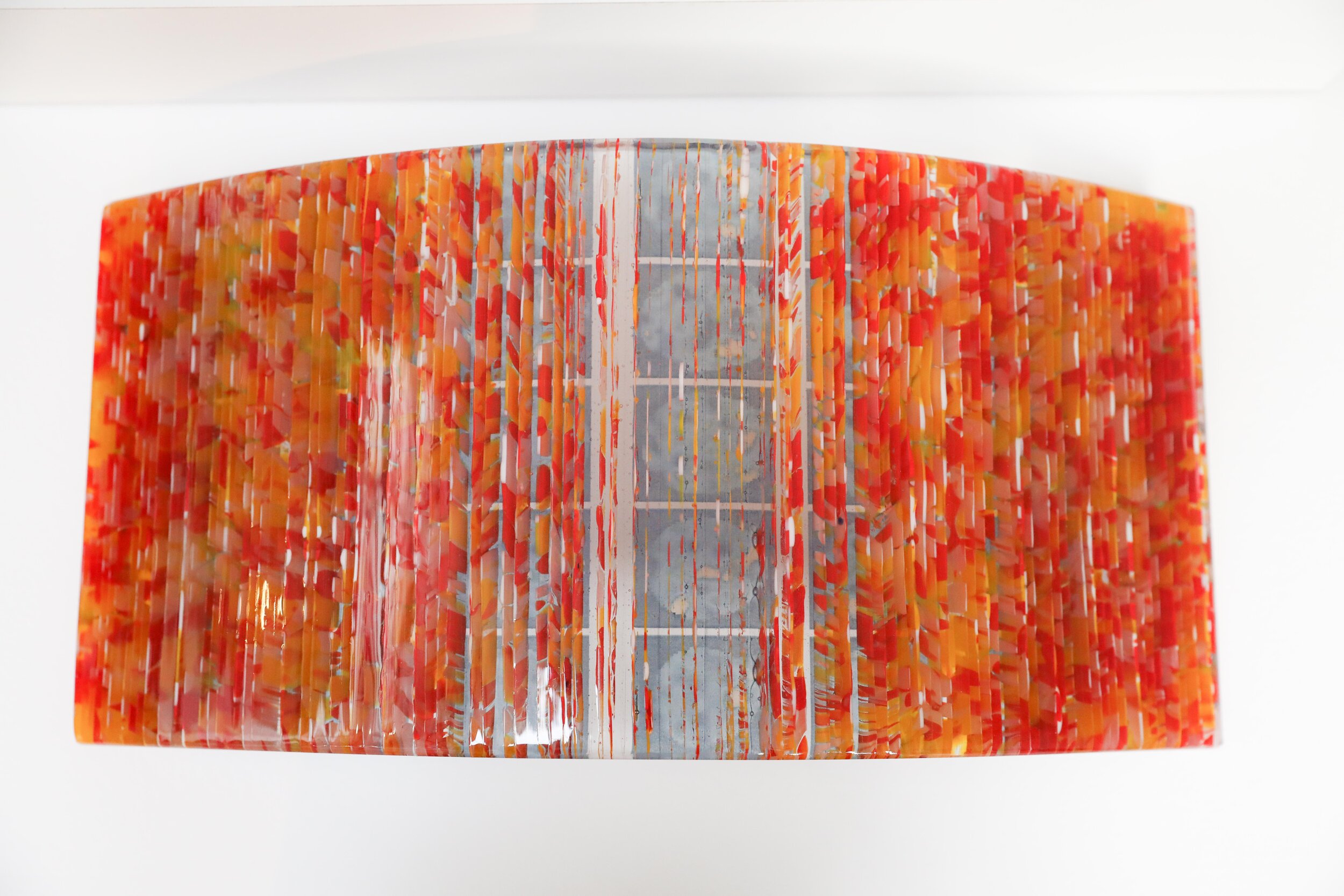
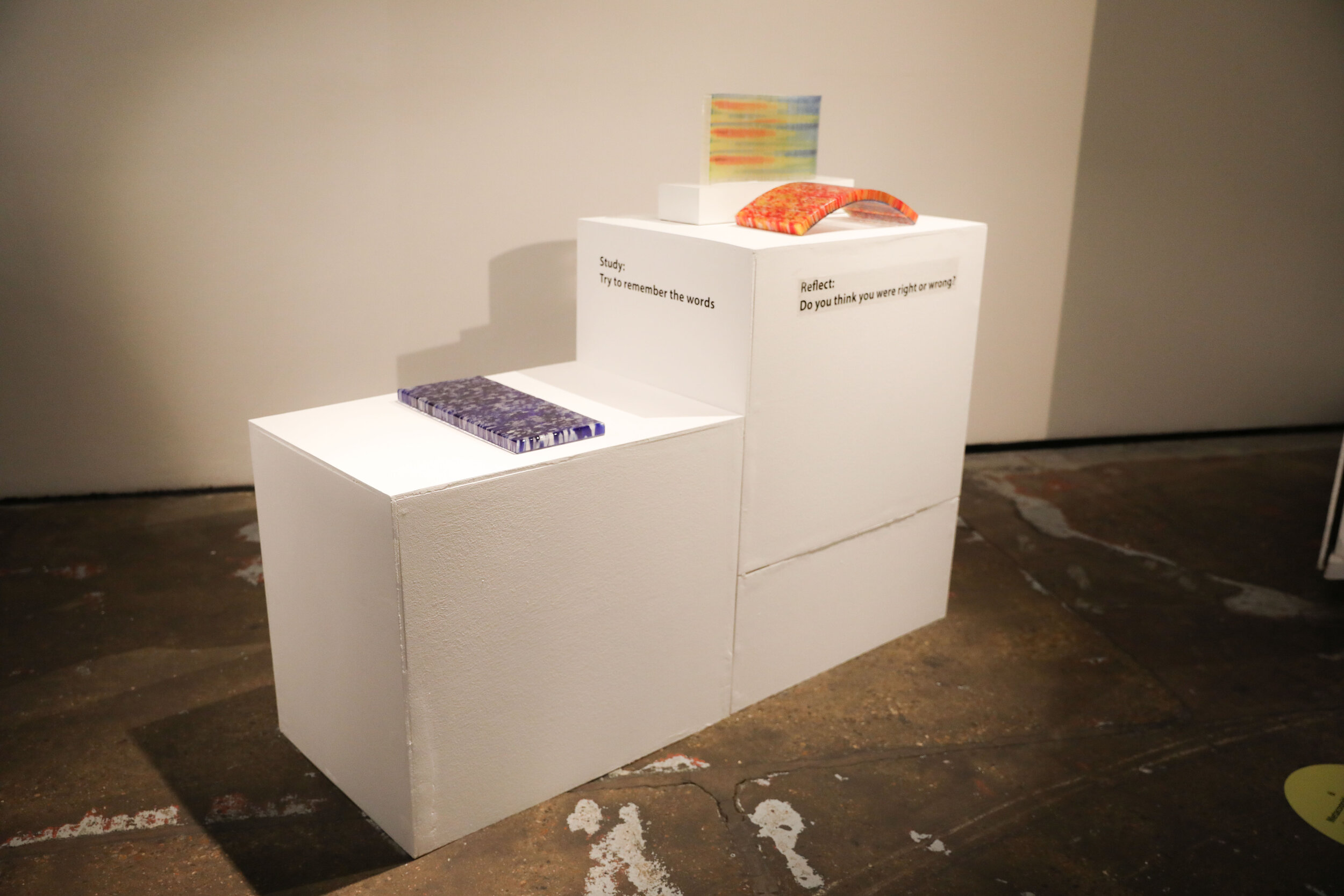
Andrew, Elisa and Steve have been involved with the Dear World Project, a cross-disciplinary public engagement collaboration that pairs artists and scientists to explore mental health. Their artwork, created by Nicole Morris, Tom Berry and Cathryn Shilling, was displayed in an exhibition as part of a wider collaboration with the Wellcome Centre for Human Neuroimaging and Max Plank Centre for Computational Psychiatry.
Nadine Dijkstra has received two prestigious postdoctoral fellowships to support her work on perceptual awareness and reality monitoring in the lab - a Rubicon Fellowship from the NWO and a Marie Curie Fellowship from the EU. Congratulations Nadine!


A big welcome to new lab members Nadine Dijkstra, Nadim Atiya and Oliver Warrington!
See the people page for more about them and their research plans.


Last year’s MetaLab Masters student Lion Schulz has been awarded the “Best student of the year award” for achieving the highest overall academic performance in UCL’s Cognitive and Decision Sciences MSc. Congratulations to Lion and his supervisor Max!


Steve and Matan were interviewed about consciousness for The Why Factor on the BBC World Service.
There are two programmes - in the first we discuss “Why are we conscious of so little?”, and in the second, “What is the point of consciousness?”
Links below, enjoy!
MetaLab Masters student Roy Tal has been awarded the 2019 Richard Frackowiak MSc Prize for the highest scoring student on UCL’s MSc Brain and Mind Sciences. Congratulations to Roy and his supervisor Matan!
